Amber
Fossil resin · C₁₀H₁₆O. Colors: yellow, orange, brown; rarely blue or green.
- Mohs
- 2–2.5
- RI
- 1.54
- SG
- 1.08
- Crystal system
- organic
Amber at a glance.
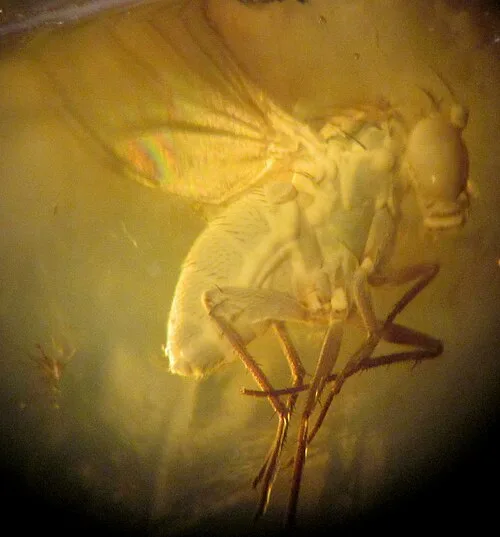
- Species
- Fossil resin
- Formula
- C₁₀H₁₆O
- Crystal system
- organic
- Mohs
- 2–2.5
- RI
- 1.54
- SG
- 1.08
- Colors
- yellow, orange, brown; rarely blue or green
What the encyclopedia says.
5 passages, quoted as published. Each links to the full entry and the sources of its chapter.
Minerals, rocks, organic gems and man-made stones
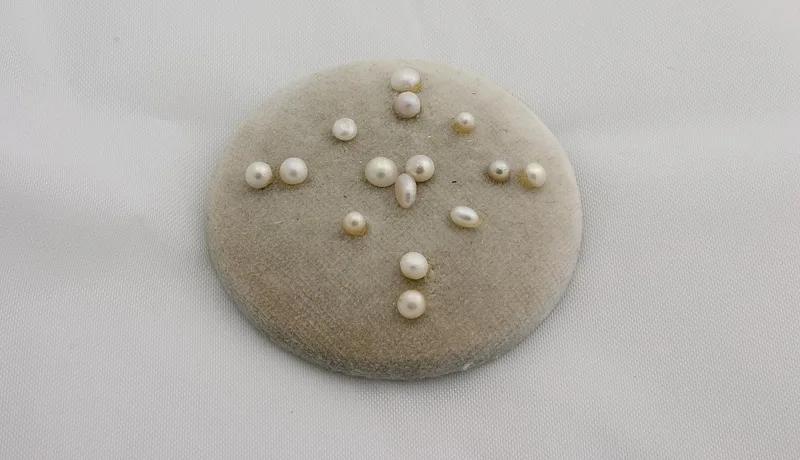
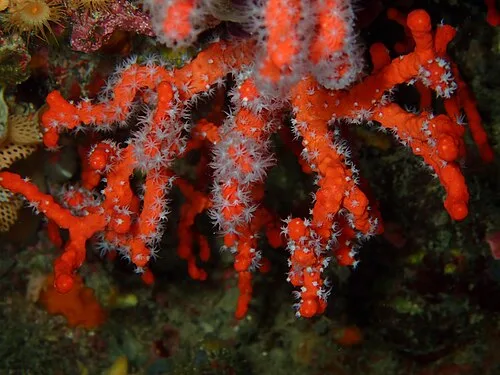
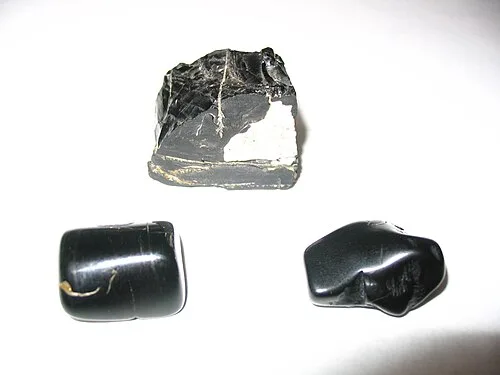
Several important gems do not. A rock is an aggregate of one or more minerals: lapis lazuli is a rock made mostly of blue lazurite with white calcite and brassy pyrite. A mineraloid is natural but lacks an ordered structure, and opal and obsidian are the usual examples. Organic gems come from living things. Pearl grows inside mollusks, precious coral is an animal skeleton, amber is fossilized tree resin and jet is a type of lignite formed from ancient wood.
Read the full entryCoral, amber, jet, ammolite, shell and ivory
Amber is fossilized tree resin. GIA gives it a refractive index of 1.540, a specific gravity of 1.08 and a hardness of 2–2.5, light enough to float in a saturated salt solution. Jet is a compact lignite formed from ancient wood, listed by CIBJO under the name jet or gagat.
Read the full entryChemical composition and crystal systems
Some gem materials have no long-range atomic order and so no crystal system. Glass, most gem opal and organic amber are amorphous, and like cubic crystals they are optically isotropic.
Read the full entryLuster, transparency and pleochroism
Luster describes the quality of light reflected from a gem’s surface. It depends on refractive index and on how well the surface takes a polish. Diamond has adamantine luster, the brightest ordinary type; most gems, from quartz to corundum, are vitreous, or glassy. Other standard terms include resinous for amber, waxy for turquoise, pearly for pearls and some cleavage surfaces, and silky for fibrous materials.
Read the full entryCleaning, storage and wearability
How a stone survives daily wear depends on three separate properties. Hardness resists scratching, toughness resists chipping and breaking, and stability resists heat, light and chemicals. Topaz rates 8 on the Mohs scale but has a cleavage, a plane along which it can split, so a sharp knock may break it. Jade rates only about 6–7 yet is exceptionally tough. Pearl and amber are soft, and pearls are damaged by acids in perfume, cosmetics and perspiration.
Read the full entry
Where it is mined.
Localities from the mine map in Chapter 05.
| Locality | Country | Status | Note |
|---|---|---|---|
| Yantarny (Primorskoye) | Russia | active | Kaliningrad amber combine; open pit worked since 1976 on the largest known amber deposit, 627 t produced in 2024 |
Cleaning and wear.
From the care table in Chapter 22.
| Stone | Ultrasonic | Steam | Notes |
|---|---|---|---|
| Amber | Avoid | Avoid | GIA's 4Cs guidance says amber should not be put in an ultrasonic cleaner; warm water and mild soap only. Light darkens it and chemicals harm it. |
Print the care chart for all 25 stones A4 · PDF · 133 kBUS Letter · PDF · 132 kB
Seen the one
you want?
Name it in a brief. We find it in any producing country and have it tested independently.