Morganite
Beryl · Be₃Al₂Si₆O₁₈. Colors: pink to orange-pink.
- Mohs
- 7.5–8
- RI
- 1.583–1.59
- SG
- 2.8–2.91
- Crystal system
- hexagonal
Morganite at a glance.
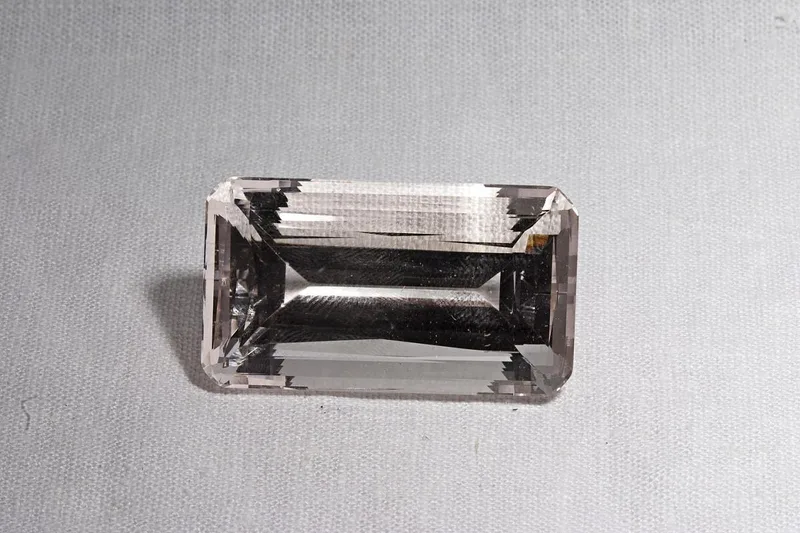
- Species
- Beryl
- Formula
- Be₃Al₂Si₆O₁₈
- Crystal system
- hexagonal
- Mohs
- 7.5–8
- RI
- 1.583–1.59
- SG
- 2.8–2.91
- Colors
- pink to orange-pink
What the encyclopedia says.
2 passages, quoted as published. Each links to the full entry and the sources of its chapter.
Species, varieties and groups
Corundum shows how this works. Every ruby and every sapphire is crystalline aluminum oxide, Al₂O₃, with the same hardness and nearly the same density and refractive index. Traces of chromium produce red, which the trade calls ruby. Iron and titanium produce blue sapphire, and other traces give the yellow, pink, orange and violet stones sold as fancy sapphires. Beryl follows the same pattern: chromium or vanadium makes emerald, ferrous iron makes aquamarine and manganese makes morganite.
Read the full entryBeryl: emerald, aquamarine and relatives
Aquamarine is greenish blue and light in tone. Morganite, pink to orange-pink, takes its color from traces of manganese and reads a little higher, 1.583–1.590 and 2.80–2.91. Red beryl owes its color to Mn³⁺. It was first reported from Utah's Thomas Range in 1905 and found on the eastern flank of the Wah Wah Mountains in the late 1950s, still the source of nearly all gem material. Its early name bixbite never came into wide use.
Read the full entry
Cleaning and wear.
From the care table in Chapter 22.
| Stone | Ultrasonic | Steam | Notes |
|---|---|---|---|
| Morganite | Caution | Caution | Usually safe unless the stone has liquid inclusions or fractures; avoid heat. |
Print the care chart for all 25 stones A4 · PDF · 133 kBUS Letter · PDF · 132 kB
Seen the one
you want?
Name it in a brief. We find it in any producing country and have it tested independently.