Tanzanite
Zoisite · Ca₂Al₃(SiO₄)₃(OH). Colors: violet blue to bluish violet to violet purple.
- Mohs
- 6–7
- RI
- 1.691–1.7
- SG
- 3.35
- Crystal system
- orthorhombic
Tanzanite at a glance.
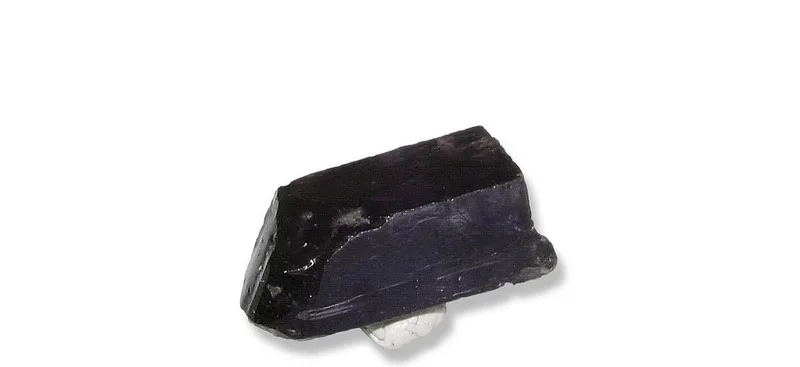
- Species
- Zoisite
- Formula
- Ca₂Al₃(SiO₄)₃(OH)
- Crystal system
- orthorhombic
- Mohs
- 6–7
- RI
- 1.691–1.7
- SG
- 3.35
- Colors
- violet blue to bluish violet to violet purple
What the encyclopedia says.
6 passages, quoted as published. Each links to the full entry and the sources of its chapter.
Other transparent gems: tanzanite to spodumene
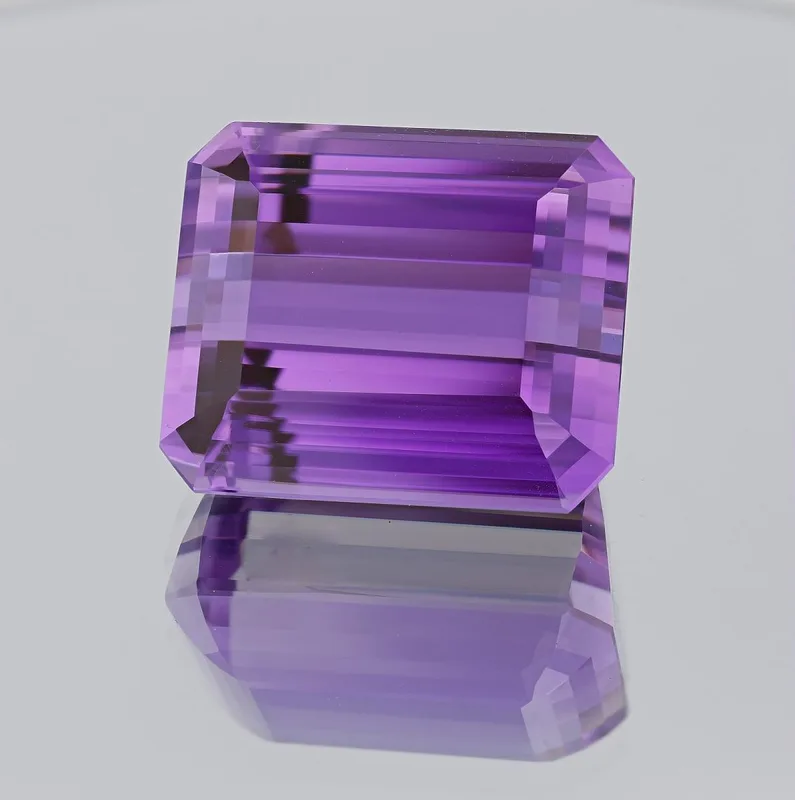
Tanzanite is the violet blue to violet purple variety of zoisite, Ca₂Al₃(SiO₄)₃(OH), found in the Merelani hills of northern Tanzania in the 1960s and still commercially mined only there. It is strongly pleochroic, and most stones are heated, which removes or reduces the yellow green or brownish pleochroic color and leaves more blue and violet.
Read the full entryLuster, transparency and pleochroism
Pleochroism is a change in body color with viewing direction. It occurs only in doubly refractive crystals, which absorb light differently along different optical directions. Tetragonal, hexagonal and trigonal crystals can show two colors (dichroism); orthorhombic, monoclinic and triclinic crystals can show three (trichroism). Cubic and amorphous materials show none. Tanzanite is strongly pleochroic and shows three different colors as the crystal is turned, and cutters orient the rough so that the best of them faces up through the table.
Read the full entryTanzanite, tourmaline, jade, lapis, turquoise, opal
Tanzanite, the blue to violet variety of the mineral zoisite, is mined commercially only in the Merelani Hills of northern Tanzania, in a strip about 7 km long and 2 km wide. It was identified in 1967. After a 24 km wall was built around the mines to curb smuggling, recorded production rose from 147.7 kg in 2018 to 781.2 kg in 2019.
Read the full entryHeat treatment and the no-heat premium
Heating is the oldest and most widespread gem treatment. SSEF places commercial heating of corundum in a range of roughly 700 to 1,800 °C, dividing low-temperature work below about 1,000 °C from high-temperature work above about 1,200 °C. Past that upper figure the fine rutile needles called silk dissolve and expansion cracks open around inclusions; GIA’s 2019 Madagascar heating experiments recorded deeper, more saturated blue in stones taken that high. Heat also converts amethyst to citrine, and GIA states that most citrine sold is heated amethyst because natural citrine is rare. GIA describes aquamarine as routinely heated to remove greenish tints. LMHC Information Sheet #15 of 2025 calls tanzanite commonly heated and adds that the treatment is sometimes not determinable.
Read the full entrySmuggling and undervaluation
Alluvial diamonds and colored stones are the easiest to smuggle, because independent diggers mine them over wide areas and sell them for cash. During the wars of the 1990s, diamonds from Sierra Leone crossed into Liberia and left as Liberian exports, which is why the UN embargoed Liberian rough. Producing countries respond with official buying offices, government valuators who check export declarations against market prices, and controlled mining zones. Tanzania walled in the Merelani tanzanite field near Arusha: the 24 km barrier was built between July 2017 and April 2018, enclosing about 8 km². Merelani is the world's only source of tanzanite, so one fence covers the whole supply.
Read the full entryCleaning, storage and wearability
Ultrasonic cleaners loosen dirt with high-frequency vibration, and steam cleaners blast it away with hot pressurized steam. Both can widen fractures, split stones along cleavage, drive out the oils or resins used as fillers and shock heat-sensitive gems. GIA's gem-by-gem guidance, summarized in the table, treats warm soapy water and a soft brush as the safe method for nearly all gems. It calls both machines safe for untreated or heat-treated ruby and sapphire and advises against them for emerald, opal, pearl, tanzanite, turquoise and moonstone. The safe, caution and avoid ratings in that table are this encyclopedia's own three-way scheme, mapped from GIA's wording rather than published by GIA. For diamonds, GIA advises against both at home because vibration can loosen stones in their settings.
Read the full entry
Where it is mined.
Localities from the mine map in Chapter 05.
| Locality | Country | Status | Note |
|---|---|---|---|
| Merelani Hills | Tanzania | active | Only commercial tanzanite source, about 7 × 2 km, enclosed by a 24 km wall |
Cleaning and wear.
From the care table in Chapter 22.
| Stone | Ultrasonic | Steam | Notes |
|---|---|---|---|
| Tanzanite | Avoid | Avoid | GIA says never recommended; cleavage and fair to poor toughness, sensitive to sudden temperature change. |
Print the care chart for all 25 stones A4 · PDF · 133 kBUS Letter · PDF · 132 kB
Seen the one
you want?
Name it in a brief. We find it in any producing country and have it tested independently.